ENG 205 (Intro to Fiction): J. R. R. Tolkien and C. S. Lewis
Spring 2024

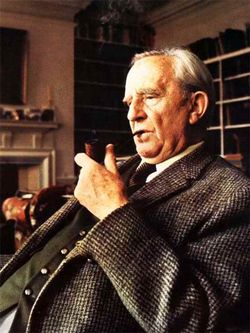
John Ronald Reuel Tolkien, 4 January 1892 — 2 September 1973
|
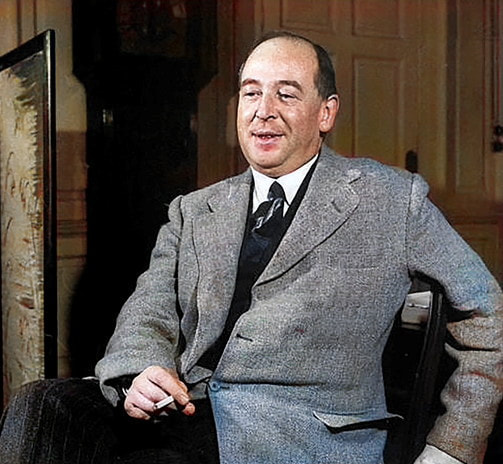
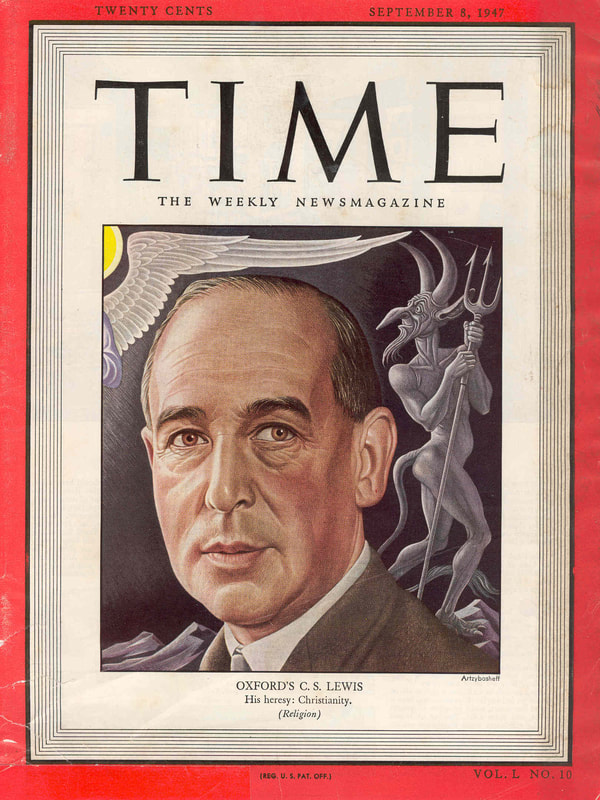
Clive Staples ("Jack") Lewis, 29 November 1898 — 22 November 1963
|
The imaginative writings of the Oxford scholars J. R. R. Tolkien and C. S. Lewis constitute some of the most widely read, most beloved, and most pervasively influential fiction of the twentieth century. The two friends shared drafts of their work and presided together over a group of like-minded writers and thinkers. Across all their varied writings—and especially in their construction of fictive worlds—Tolkien and Lewis both thought of themselves as effecting a resistance to the prevailing literary and cultural pieties of modernity. And yet the two men were also temperamentally quite different and often aesthetically in deep tension with one another. In this course, we will compare the ways Lewis and Tolkien deploy genre, character, diction, narrative voice, imagery, and other literary techniques in the construction of their various fantastic worlds. We will consider too the ways in which both writers articulated their commitment to a Christian worldview (and their opposition to “the machine”) and how they both came to understand the power and purpose of mythology. We will also have occasion to think through together how Tolkien and Lewis reproduced certain problematic aspects of the racism and sexism of their culture and how these might affect our evaluation of their works.
|
Schedule of Readings and Assignments
Before the first class: please read the "Curated Collection of Quotations from J. R. R. Tolkien and C. S. Lewis" (predistributed as PDF or accessible here). M Jan 22: Introductions. Please also read through this chronological list of Tolkien and Lewis's publications. And for a stimulating opening read, see "Fantasy and the Buffered Self" by Alan Jacobs, published online at New Atlantis. W Jan 24: “The Golden Key” by George MacDonald (PDF); and Smith of Wootton Major by J. R. R. Tolkien Th Jan 25: Quotation response due (1 page) F Jan 26: The Hobbit by J. R. R. Tolkien, pp. 28-159 (“An Unexpected Party” to “Out of the Frying-Pan into the Fire”); and “…And Back Again?” by Adam Roberts (PDF) M Jan 29: The Hobbit, pp. 160-363 (“Queer Lodgings” to “The Last Stage”) W Jan 31: The Hobbit, continued; Tom Shippey, “The Bourgeois Burglar” (PDF) F Feb 2: “On Fairy-Stories” by J. R. R. Tolkien (PDF) M Feb 5: The Silmarillion by J. R. R. Tolkien, pp. 15-54 (“Ainulindalë” to “Of the Coming of the Elves”); and Verlyn Flieger, Splintered Light, chapters 4-6, pp. 33-56 (PDF); and peruse the “Appendix: Elements in Quenya and Sindarin Names” at the end of the Silmarillion, pp. 355-365 W Feb 7: The Silmarillion by J. R. R. Tolkien, pp. 55-90 (“Thingol and Melian” to “Of the Flight of the Noldor”); and Verlyn Flieger, Splintered Light, chapters 4-6, pp. 33-56 (PDF) F Feb 9: The Silmarillion, pp. 91-105, 162-187 (“Of the Sindar,” “Of the Sun and the Moon and the Hiding of Valinor,” “Of Men,” and “Of Beren and Lúthien”); Verlyn Flieger, Splintered Light, chapters 15 & 16, pp. 127-138 (PDF); and “Lúthien Tinúviel and Bodily Desire in the Lay of Leithian” by Cami D. Agan (PDF) M Feb 12: The Silmarillion, pp. 227-282 (“Of the Ruin of Doriath” to “Akallabêth”) W Feb 14: Out of the Silent Planet, pp. 9-41; “The Heavens” from The Discarded Image by C. S. Lewis (PDF); and “Religion and Rocketry” by C. S. Lewis (PDF) F Feb 16: Out of the Silent Planet by C. S. Lewis, pp. 42-103 M Feb 19: Out of the Silent Planet, pp. 104-158 W Feb 21: The Screwtape Letters, pp. ix-85 F Feb 23: The Screwtape Letters, pp. 86-175; and “A Cosmic Shift in The Screwtape Letters” by Brenton Dickieson (JSTOR) M Feb 26: The Lord of the Rings by J. R. R. Tolkien, pp. 1-122 (“Prologue” to “The Old Forest”); and Steve Walker, “Ordinary Everyday Magic” (PDF) T Feb 27: Paper #1 due (4-5 pp.) W Feb 28: The Lord of the Rings, pp. 123-215 (“In the House of Tom Bombadil” to “Flight to the Ford”); and read Verlyn Flieger, “The Curious Incident of the Dream at the Barrows” (PDF) F Mar 1: The Lord of the Rings, pp. 219-332 (“Many Meetings” to “The Bridge of Khazad-Dûm”) M Mar 4: The Lord of the Rings, pp. 333-407 (“Lothlórien” to “The Breaking of the Fellowship”); Verlyn Flieger, “Falling Asleep Again” (PDF) W Mar 6: The Lord of the Rings, pp. 413-505 (“The Departure of Boromir” to “The White Rider”) Th Mar 7: Quotation Log (with Reflection) Due. F Mar 8: The Lord of the Rings, pp. 506-600 (“The King of the Golden Hall” to “The Palantír”) March 9-17: Fall Break M Mar 18: The Lord of the Rings, pp. 603-682 (“The Taming of Sméagol” to “The Window on the West”) W Mar 20: The Lord of the Rings, pp. 683-742 (“The Forbidden Pool” to “The Choices of Master Samwise”) F Mar 22: The Lord of the Rings, pp. 747-829 (‘Minas Tirith” to “The Siege of Gondor”) M Mar 25: The Lord of the Rings, pp. 839-893 (“The Ride of the Rohirrim” to “The Black Gate Opens”) W Mar 27: The Lord of the Rings, pp. 897-973 (“The Tower of Cirith Ungol” to “The Steward and the King”); “Service” by Scott Kleinman F Mar 29: The Lord of the Rings, pp. 974-1031 (“Many Partings” to “The Grey Havens”); “The Dethronement of Power” by C. S. Lewis (PDF); and “Oo, Those Awful Orcs!” by Edmund Wilson (PDF) M Apr 1: The Lord of the Rings. Skim the Appendices ad libitum. And read “A Hierarchical World” by Dimitra Fimi (PDF); “Tolkien and the Other: Race and Gender in Middle-earth” by Jane Chance (PDF); and “Tolkien’s Cosmic-Christian Ecology: The Medieval Underpinnings” by Alfred K. Siewers (PDF) W Apr 3: The Lord of the Rings; “Homoeroticism” by Esther Saxey (PDF); “Finding Ourselves in the (Un)Mapped Lands” by Una McCormack (PDF) F Apr 5: The Lion, the Witch and the Wardrobe, chapters 1-9, pp. 3-99; Alister McGrath, “Rearranging Reality: The Creation of Narnia” (PDF) M Apr 8: The Lion, the Witch and the Wardrobe, chapters 10-17, pp. 100-189; Jennifer L. Miller, "No Sex in Narnia? How Hans Christan Andersen's 'Snow Queen' Problematizes The Chronicles of Narnia" (JSTOR) W Apr 10: The Magician’s Nephew, chapters 1-8, pp. 3-111 F Apr 12: The Magician’s Nephew, chapters 9-15, pp. 112-202; “The Magician’s Nephew: Creation and Narnian Ecology” by Matthew Dickerman and David O’Hara (PDF) M Apr 15: The Voyage of the Dawn Treader, chapters 1-7, pp. 3-113 W Apr 17: The Voyage of the Dawn Treader, chapters 8-16, pp. 114-248 F Apr 19: The Last Battle by C. S. Lewis (second half, PDF); and “‘No Sex, please, We're Narnians’” by Andy Gordon (JSTOR) M Apr 22: Till We Have Faces by C. S. Lewis, pp. 3-146 W Apr 24: Till We Have Faces, pp. 147-284 Th Apr 25: Quotation Log (with Reflection) Due. F Apr 26: Till We Have Faces, pp. 287-356; and "Baptizing the Imagination: The Fantastic as the Subversion of Fundamentalism" by Mara Donaldson (JSTOR). Paper #2 due (4-5 pp.). 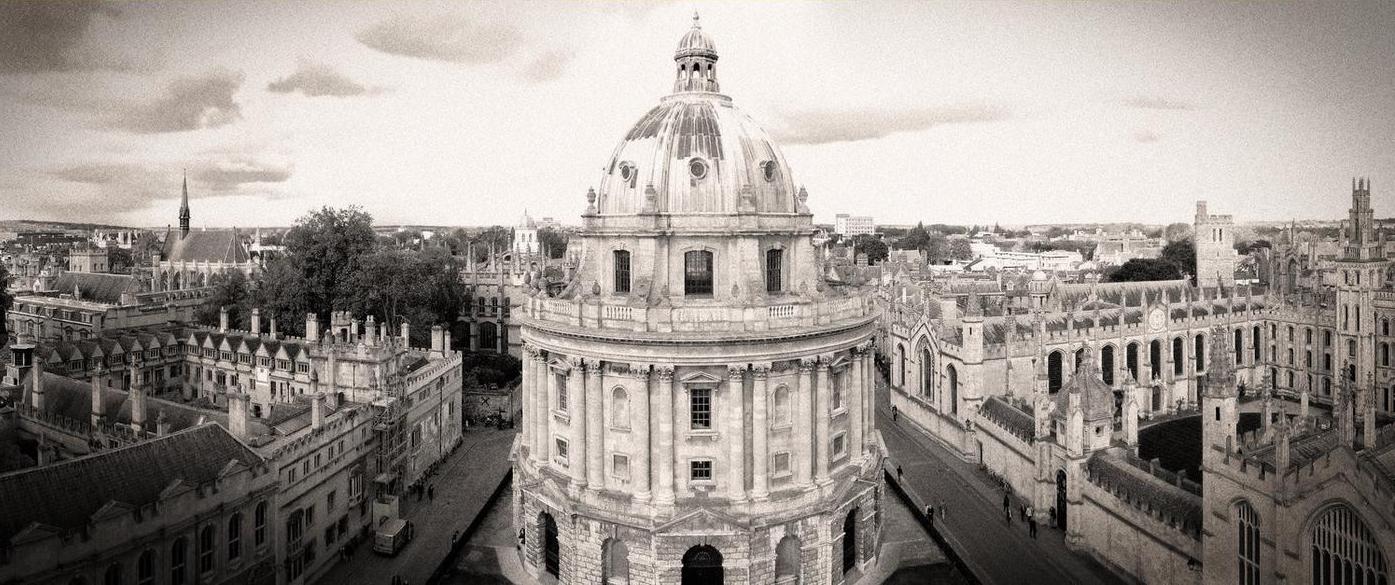
|

Required Textbooks
J. R. R. Tolkien, The Lord of the Rings, one-volume edition (Houghton Mifflin Harcourt, isbn 978-0-618-64561-9) J. R. R. Tolkien, The Silmarillion (HarperCollins, isbn 978-0-544-33801-2) J. R. R. Tolkien, The Annotated Hobbit, ed. Douglas Anderson (Houghton Mifflin, isbn 978-0-618-13470-0) J. R. R. Tolkien, Smith of Wootton Major / Farmer Giles of Ham (Del Rey, isbn 978-0-345-33606-4) C. S. Lewis, Out of the Silent Planet (Simon and Schuster, isbn 9-780743-234900) C. S. Lewis, The Screwtape Letters (HarperCollins, isbn 978-0-06-065293-7) C. S. Lewis, Till We Have Faces (HarperCollins, isbn 978-0-06-2256541-9) C. S. Lewis, The Lion, the Witch and the Wardrobe (HarperCollins, isbn 978-0-06-440942-1) C. S. Lewis, The Magician's Nephew (HarperCollins, isbn 978-0-06-440943-8) C. S. Lewis, The Voyage of the Dawn Treader (HarperCollins, isbn 978-0-06-440946-9) Learning Outcomes
|

Course Policies
Attendance
Your regular attendance, both physical and mental, is an integral component of this course. More than two unexcused absences will affect your grade; more than four unexcused absences will jeopardize your chances of passing the course. Please contact the course instructor if Covid-related factors necessitate your absence.
Class Participation
Though this class may be large, I expect everyone to participate regularly. If speaking aloud in class is not amenable to you, you may certainly discuss the texts with me in my office hours. Please note that class participation counts toward your final grade (10%).
Papers
There are three papers due in this course — a short response paper (1-2 pages), due September 1, and two standard analytical papers (4-6 pages each), due October 4 and December 7. Papers are due at 5:00 p.m. on their respective due dates. Papers should be typed and double-spaced, in a professional font; please no cover sheets. All papers are due as printed paper copies. Papers passed in after the due date will be graded down one-half grade per every day late. Additionally, I will not write comments on any paper passed in late without permission.
Quotation Log
20% of your grade will involve your conscientious keeping of a “quotation log.” This log will be a file (Word or Google doc) containing a cumulative compilation of quotations from the assigned primary texts, at least one quotation per class meeting day. In other words, for each MWF class meeting, you should have copied into your log some quotation from the primary text reading for that day; if you miss class, you are still responsible for keeping up with your log. The passage you copy can be a sentence or a paragraph or longer passage — even a short conversation between two or more characters. The important part is that the quotations you choose every day should be passages that grab you, that make you stop and think, passages whose language moves you, that you find especially beautiful or haunting or disturbing. The point of this ongoing assignment is to provide another mode of engaging closely with the text. You will pass the log in twice, once just before spring break (March 7), and again at the end of the semester. Each time you pass it in, your log should be prefaced with a short (1-page) reflection on what you’ve learned so far about the authors, about any aspect of their writing, about the issues they raise, or about yourself, from the keeping of the log.
Final Grade
10% class participation
25% paper #1 (due Feb. 27)
25% paper #2 (due Apr. 26)
10% short response (due Jan. 25)
20% quotation log (passed in twice, and including both brief reflections)
10% final examination (take-home)
Attendance
Your regular attendance, both physical and mental, is an integral component of this course. More than two unexcused absences will affect your grade; more than four unexcused absences will jeopardize your chances of passing the course. Please contact the course instructor if Covid-related factors necessitate your absence.
Class Participation
Though this class may be large, I expect everyone to participate regularly. If speaking aloud in class is not amenable to you, you may certainly discuss the texts with me in my office hours. Please note that class participation counts toward your final grade (10%).
Papers
There are three papers due in this course — a short response paper (1-2 pages), due September 1, and two standard analytical papers (4-6 pages each), due October 4 and December 7. Papers are due at 5:00 p.m. on their respective due dates. Papers should be typed and double-spaced, in a professional font; please no cover sheets. All papers are due as printed paper copies. Papers passed in after the due date will be graded down one-half grade per every day late. Additionally, I will not write comments on any paper passed in late without permission.
Quotation Log
20% of your grade will involve your conscientious keeping of a “quotation log.” This log will be a file (Word or Google doc) containing a cumulative compilation of quotations from the assigned primary texts, at least one quotation per class meeting day. In other words, for each MWF class meeting, you should have copied into your log some quotation from the primary text reading for that day; if you miss class, you are still responsible for keeping up with your log. The passage you copy can be a sentence or a paragraph or longer passage — even a short conversation between two or more characters. The important part is that the quotations you choose every day should be passages that grab you, that make you stop and think, passages whose language moves you, that you find especially beautiful or haunting or disturbing. The point of this ongoing assignment is to provide another mode of engaging closely with the text. You will pass the log in twice, once just before spring break (March 7), and again at the end of the semester. Each time you pass it in, your log should be prefaced with a short (1-page) reflection on what you’ve learned so far about the authors, about any aspect of their writing, about the issues they raise, or about yourself, from the keeping of the log.
Final Grade
10% class participation
25% paper #1 (due Feb. 27)
25% paper #2 (due Apr. 26)
10% short response (due Jan. 25)
20% quotation log (passed in twice, and including both brief reflections)
10% final examination (take-home)
